Closing a Corporation in Canada: The Tax and Filing Checklist

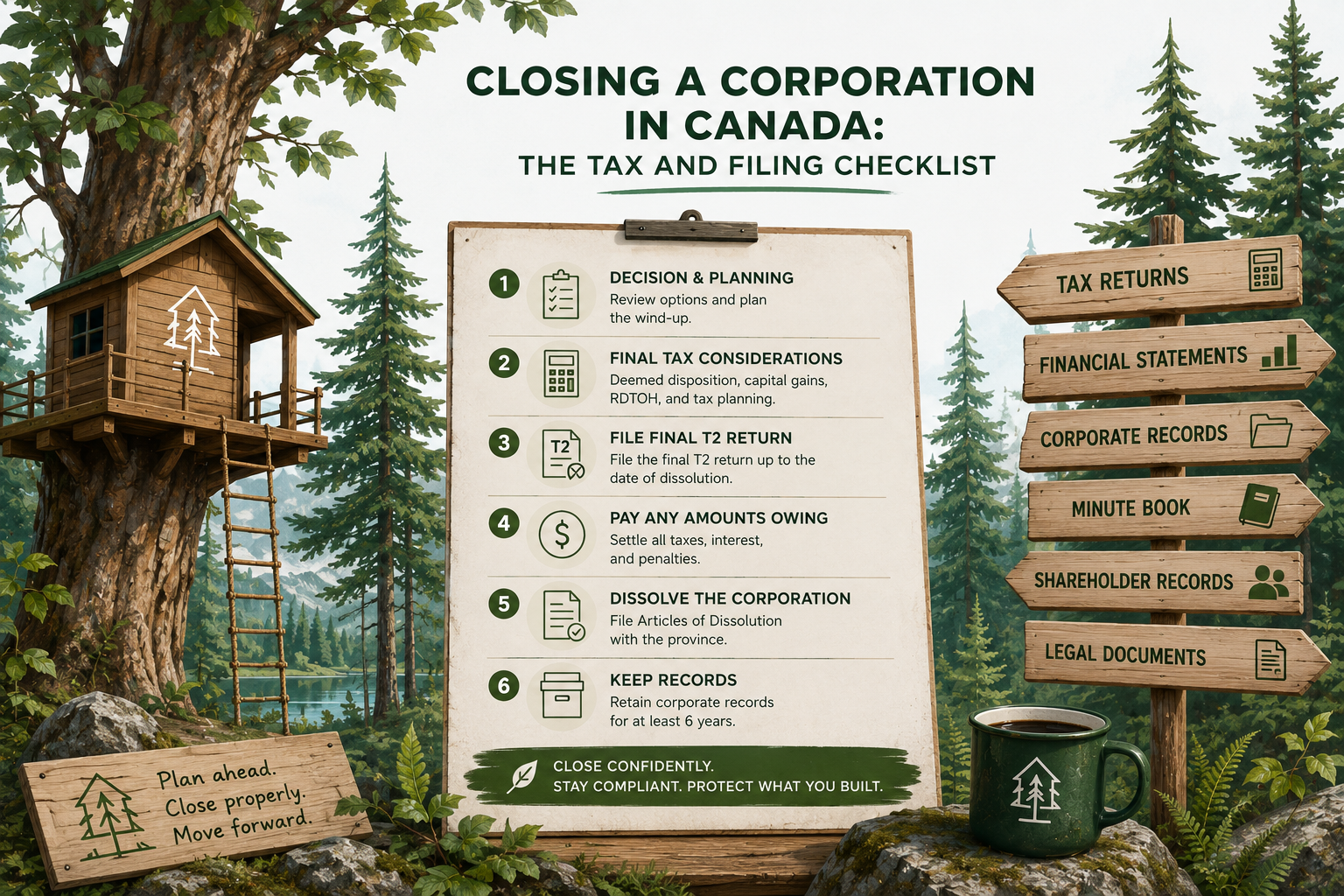
Closing a Canadian corporation? Use this practical tax checklist for final T2 returns, CRA accounts, GST/HST, payroll, shareholder balances, dissolution, and records.
By Majdi Ibrahim, CPA | Majdi Ibrahim, CPA Professional Corporation | Ottawa, Ontario
Closing a corporation can feel simple from the outside. The business stopped operating, the bank account is nearly empty, and there may be no new sales coming in. But for tax purposes, a corporation is not finished just because activity has slowed down.
Before an owner in Ottawa, Kanata, Barrhaven, Orléans, or elsewhere in Ontario closes a company, the tax accounts need to be cleaned up. That usually means reviewing the books, filing required T2 returns, closing payroll and GST/HST accounts where applicable, dealing with shareholder balances, reviewing final distributions, and keeping proof that the corporation's affairs were wound down properly.
The main point is this: inactive is not the same as dissolved, and dissolved is not the same as tax-clean.
At a Glance
- Closing a corporation is both a tax cleanup project and a legal dissolution project.
- CRA program accounts do not all close the same way.
- A corporation that has not been dissolved may still have to file T2 returns, even if it has no tax payable.
- Payroll, GST/HST, dividends, shareholder loans, and final asset distributions can create separate filings.
- Clearance certificate exposure should be reviewed before corporate property is distributed.
- Manual review is important before anything is filed or dissolved.
Start by confirming the corporation is actually ready to close
Before filing dissolution documents, pause and confirm what is still inside the corporation.
Common items to check include:
- cash in the bank
- unpaid customer invoices
- unpaid suppliers or credit cards
- payroll owing
- GST/HST owing or refundable
- corporate tax instalments or balances
- shareholder loans
- vehicles, equipment, computers, inventory, or investments
- retained earnings
- director or shareholder resolutions
This is where a normal corporate year-end tax planning checklist becomes useful. Even if the business is closing, the final year still needs a clean set of numbers.
If the corporation is insolvent, has unpaid creditors, is in bankruptcy, or may need a formal winding-up process, the owner should get legal or insolvency advice before treating this as a simple voluntary closure.
File the required corporate tax returns
A Canadian corporation generally files a T2 corporation income tax return within six months after the end of its tax year. The balance owing is usually due earlier, generally two months after year-end, although some qualifying Canadian-controlled private corporations may have a three-month balance-due day.
If the corporation has not filed previous T2 returns, closing the corporation does not automatically erase that problem. The older filings should be reviewed before the owner assumes the corporation can be dissolved cleanly. If the issue is really about old returns, start with a catch-up plan like how to catch up with CRA if returns are behind.
The final or stub-period filing, and any unfiled earlier years, may include normal income and expenses, capital asset dispositions, shareholder benefit adjustments, debt write-offs, and final distributions. The right treatment depends on what the corporation owned and owed before it closed.
Close payroll carefully
If the corporation paid salary, wages, bonuses, or taxable benefits, the payroll account needs its own review.
Before the payroll account is closed, confirm whether the corporation has:
- remitted final source deductions
- filed final payroll information returns where required
- issued T4 or T4A slips where required
- issued Records of Employment where required
- reviewed any remaining owner-manager salary or bonus accruals
CRA guidance says a final payroll remittance is due within seven calendar days when a business stops operating or has another listed business status change. The payroll account generally closes after applicable payroll deductions and information returns are filed.
Close the GST/HST account if the corporation was registered
If the corporation had a GST/HST account, closing it is more than clicking a button. CRA requires a reason for closing the account, a cancellation date, a final GST/HST return, and payment of amounts owing.
There can also be GST/HST consequences on property held when the account closes. For example, CRA guidance discusses deemed tax on certain non-capital property and capital property when a GST/HST account is closed. This does not affect every inactive corporation in the same way, but it is a reason to review assets before deregistration.
Deal with shareholder loans and final distributions
Many small corporations have messy shareholder balances near the end. The shareholder may owe the corporation money, the corporation may owe the shareholder money, or the books may include old expenses paid personally.
Do not ignore those balances. A shareholder loan balance can have personal tax consequences, and a final distribution may need to be treated as a dividend, return of capital, repayment of shareholder loan, or another type of transaction. If the corporation has an owner draw problem, review the shareholder loan rules for incorporated business owners before dissolving.
Where dividends are paid or credited to Canadian resident shareholders, T5 slips may be required. Payments to non-residents can have different withholding and reporting rules. The distinction between eligible and non-eligible dividends also matters, especially if the corporation has a general rate income pool or previous active business income. For background, see Treehouse CPA's guide to eligible and non-eligible dividend basics.
If a corporation has meaningful retained earnings or investments, a holding-company plan should be reviewed before the final wind-up, not after. The article on moving money from an Opco to a Holdco explains one related planning area, although it is not a substitute for closure advice.
Consider whether a clearance certificate is needed
CRA clearance certificates are often misunderstood. A clearance certificate confirms, at the time issued, that the taxpayer has paid amounts owing or that CRA has accepted security. It matters because a legal representative who distributes property without clearance can be personally exposed if unpaid tax amounts later remain.
For corporations, the clearance certificate question is especially important where the corporation is winding up or dissolving and property will be distributed to shareholders. Review clearance certificate exposure before distributions are made; the application usually depends on final returns being filed and assessed, and on tax balances being paid or secured.
File dissolution documents with the correct corporate registry
The legal dissolution step depends on where the corporation was incorporated. Confirm the corporation's governing statute before filing anything. Check the articles, minute book, corporation profile, or registry record to confirm whether the corporation is Ontario, federal, or incorporated somewhere else.
For an Ontario corporation, voluntary dissolution is generally handled through the Ontario Business Registry by filing Articles of Dissolution. The registry process may require the corporation name, Ontario Corporation Number, effective date of dissolution, and Ministry of Finance consent where applicable.
For a federal corporation, the process is different and generally runs through Corporations Canada.
This is legal administration, not just tax compliance. If there are creditors, lawsuits, multiple shareholders, unresolved assets, or family disputes, legal advice should come before dissolution. Treehouse CPA can help with the tax and accounting cleanup and coordinate with legal counsel where the dissolution steps need legal input.
Keep records after closing
Do not throw away the records when the bank account closes.
CRA's general rule is that required records and supporting documents are usually kept for six years from the end of the last tax year they relate to. But there are important exceptions. If a return is filed late, the retention period can run from the filing date. If there is an objection or appeal, relevant records should be kept until the dispute and appeal period are finished. CRA's current guidance also says dissolved corporations have specific two-year-after-dissolution retention rules, and records tied to long-term assets, share ownership, liquidation, or wind-up may need longer or indefinite retention.
As a practical matter, keep the final bookkeeping file, bank statements, tax returns, GST/HST returns, payroll filings, dividend records, shareholder resolutions, dissolution documents, and clearance certificate correspondence together.
Common mistakes
Common closing mistakes include:
- dissolving the corporation before the final tax cleanup is understood
- leaving old T2 returns unfiled
- closing GST/HST without reviewing assets and final return requirements
- forgetting final payroll remittances and slips
- treating all shareholder withdrawals as harmless
- distributing corporate property before reviewing clearance certificate exposure
- destroying records too early
What Happens When You Bring This to Majdi Ibrahim, CPA?
When a closing corporation file comes to Treehouse CPA, the first step is not to rush the dissolution filing. The first step is to understand what is still open.
That usually means reviewing the last filed T2 return, the bookkeeping, CRA balances, payroll activity, GST/HST registration, bank accounts, shareholder loan balances, retained earnings, and any remaining assets. From there, Majdi can help identify the filings and tax issues that should be handled before the corporation is legally dissolved.
If your corporation is inactive or ready to close, Book a consultation at www.treehousecpa.com.
FAQ
Can I just close the bank account and stop filing T2 returns?
No. Closing a bank account does not close the corporation for tax purposes. If the corporation still exists, CRA may still expect required T2 returns to be filed.
Does dissolving the corporation erase old CRA balances?
No. Dissolution is not a strategy for avoiding tax debts, payroll source deductions, GST/HST, or old filing obligations. Review CRA balances before dissolution.
Do I always need a clearance certificate?
Not always. The need depends on the facts, especially whether corporate property will be distributed and whether a legal representative could be exposed for unpaid tax amounts. It should be reviewed before final distributions are made.
What if the corporation has no activity?
An inactive corporation may still have filing obligations until it is properly dissolved and CRA program accounts are closed. A nil-activity year should still be checked rather than assumed.
What if the corporation owes me money?
That balance should be reviewed before closing. It may be a shareholder loan payable, unpaid expense reimbursement, unpaid salary, or another balance. The tax treatment depends on the facts and the records.
How long should I keep records after closing?
Use the CRA retention period that applies to the specific record. The general rule is often six years, but dissolved corporations, late-filed returns, objections, appeals, liquidation records, share records, and long-term asset records can require different or longer retention.
Disclaimer
This article is general information for Canadian business owners and is not personalized tax, legal, or accounting advice. Corporate dissolution and final tax filings depend on the corporation's facts, records, jurisdiction, shareholders, creditors, and CRA account history. Speak with a qualified professional before acting.